


【SDG12】New Taipei's Circular Economy in Action:Black Soldier Fly Makes a Big Impact, Japanese Scholars Visit in Delegaion
2026-03-25
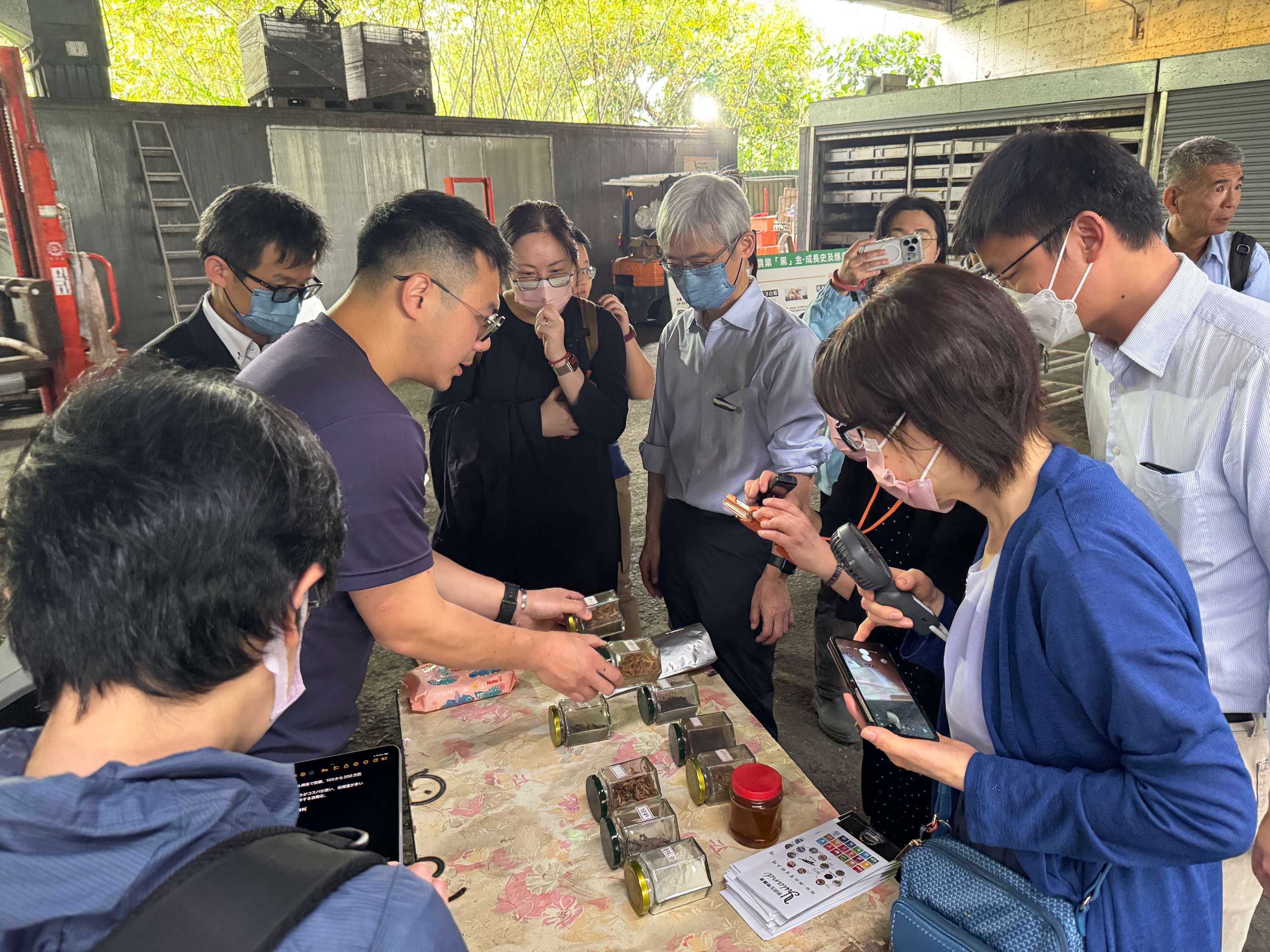
On March 24, 2026, a delegation of eight scholars and experts from Japan visited New Taipei City to observe its achievements in promoting the circular economy. The delegation included representatives from institutions such as Ryukoku University (Faculty of Policy Science), Otemon Gakuin University (Faculty of Economics), Kyushu Institute of Technology (Graduate School of Engineering), Ritsumeikan University OIC Research Organization, and Niigata Agro-Food University. Their research fields span environmental policy, economics, social applications, and agriculture. These scholars have long been engaged in advancing resource circulation management and circular economy development in Japan, with a strong focus on environmental policy research.
The Japanese scholars expressed keen interest in Taiwan’s waste management policies and their practical implementation. This exchange was made possible with the assistance of Associate Professor Ming-Sheng Ko from the Department of Materials and Mineral Resources Engineering at National Taipei University of Technology, who has long been dedicated to promoting international collaboration.
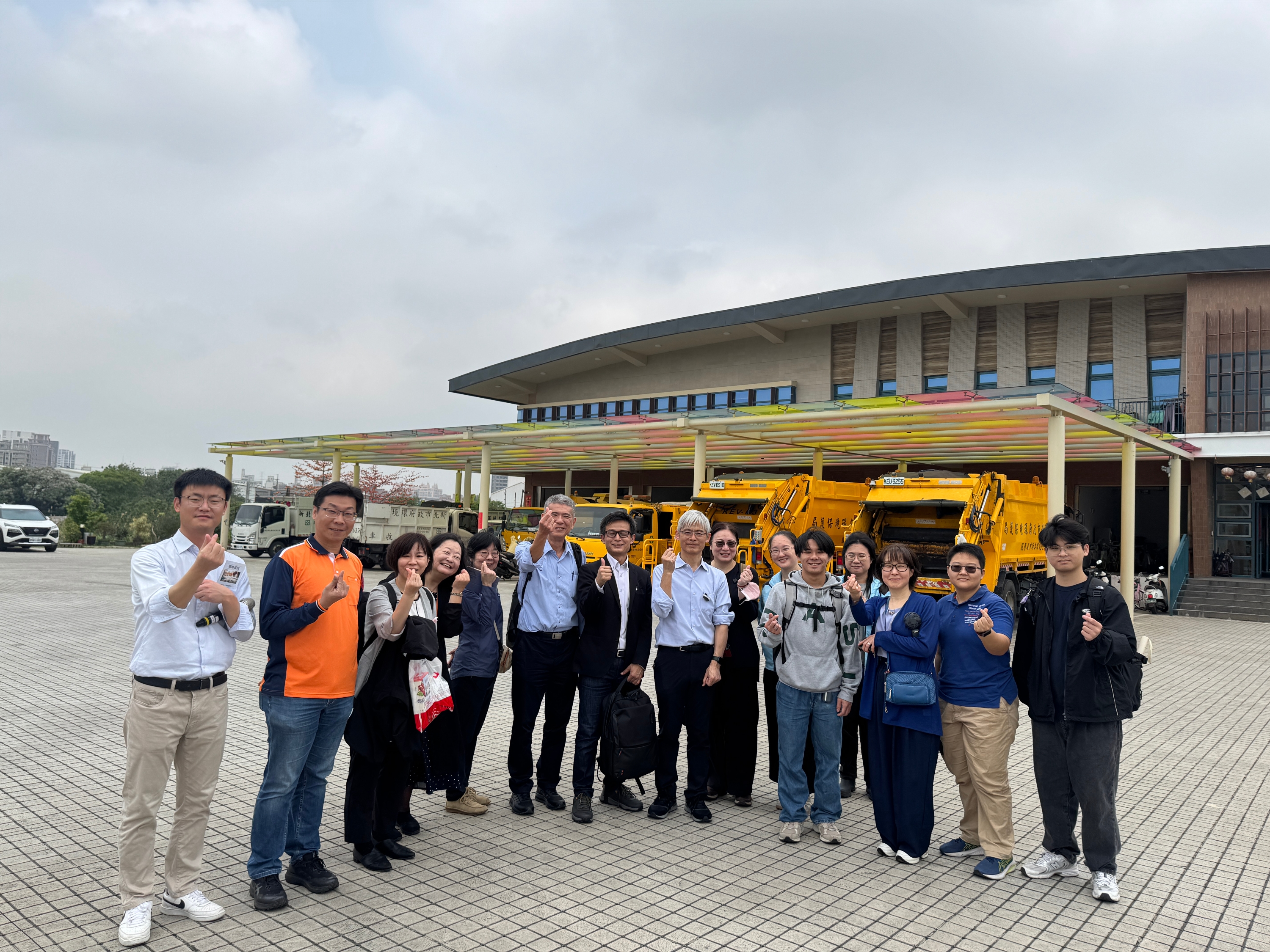
The first stop of the visit was the Yingge District Cleaning Team of the Environmental Protection Department, where participants learned about policies and practices for handling organic waste (food waste), including an on-site demonstration of black soldier fly larvae treatment. The second stop was the Regional Resource Recycling Center in Yingge District, where the delegation gained insights into how New Taipei City transforms municipal waste into reusable resources through circular economy approaches.
Professor Jiro Sakurai, one of the delegation members, shared that in February this year, Professor Hideki Kitagawa from Ryukoku University visited Taiwan and was deeply impressed by New Taipei City’s dual-track policy of designated garbage bags and “Golden Recycling Stations.” This inspired the organization of the current visit. Seeing the diverse food waste treatment methods in New Taipei City—including the practical application of black soldier fly larvae—was particularly remarkable and earned high praise for the city’s achievements.

The Environmental Protection Department explained that in recent years, New Taipei City has actively promoted diversified reuse of food waste, including high-efficiency composting, biomass energy generation, and black soldier fly larvae treatment. The pilot black soldier fly facility was established in 2023 at the Yingge District Cleaning Team. Through this process, larvae convert food waste into organic fertilizer. Rich in animal protein and fatty acids, the larvae can also be used as feed for poultry and aquaculture. To date, the program has processed over 14,000 tons of food waste and reduced approximately 0.65 metric tons of carbon emissions. This initiative not only supports New Taipei City’s progress toward net-zero emissions but also serves as an excellent site for environmental education.
The department further emphasized that, in compliance with national regulations, New Taipei City integrates waste management policies through source reduction, resource recycling, and circular economy strategies. By maximizing the value of waste through diversified reuse methods, the city employs composting, anaerobic co-digestion, and black soldier fly treatment for organic waste. Resource recycling is enhanced through AI-powered smart sorting facilities (New Taipei City Resource Circulation Education Base) and Golden Recycling Stations, ensuring optimal resource utilization. These efforts align with Taiwan’s 2050 circular economy roadmap, focusing on waste reduction at the source and tiered resource utilization. The city will continue to implement these policies and move steadily toward becoming a net-zero city by 2050.
%E8%99%95%E7%90%86%E6%96%B9%E5%BC%8F%E5%8F%8A%E6%94%BF%E7%AD%96.jpg)
 Visitor:338