


【SDG 11】New Taipei City Links Festivals with Sustainable Governance to Foster Citywide Participation in Urban Sustainable Practices
2026-02-13
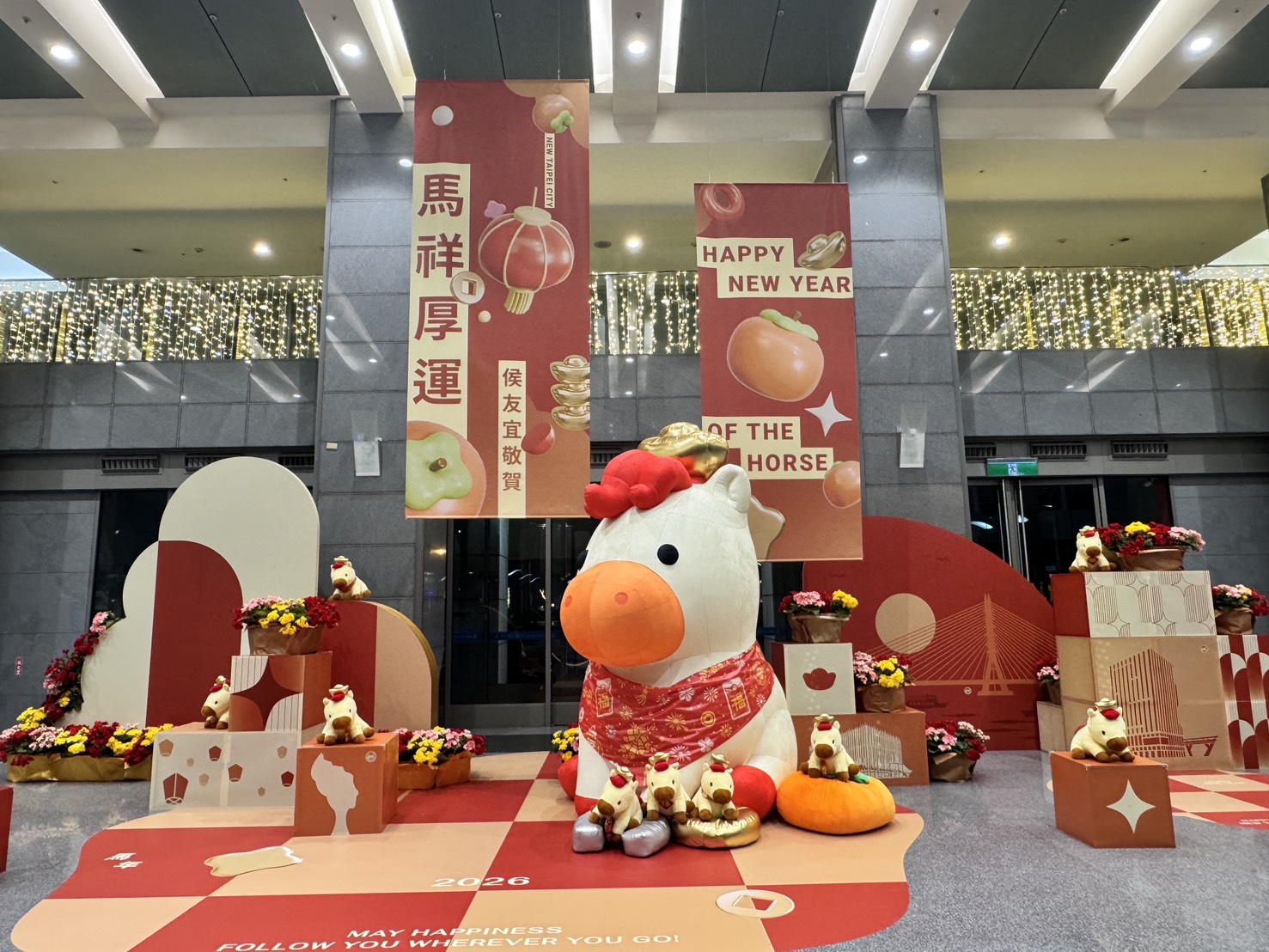
New Taipei City conveyed New Year’s greetings to the public in front of the Year of the Horse-themed installation in the City Hall lobby.
As New Taipei City prepares to welcome the 2026 Lunar Year of the Horse, it is using festivals to communicate how the principles of sustainable governance can be integrated into urban public spaces and the daily lives of its citizens, demonstrating innovative local government practices at the intersection of cultural governance and sustainable development. Through its Lunar New Year greeting activities, New Taipei City not only conveys its vision for a happy life for its citizens, but also translates the United Nations Sustainable Development Goals (SDGs) into tangible and participatory urban actions, thereby deepening public understanding and recognition of sustainability issues.
During the 2026 Lunar New Year period, the New Taipei City Government planned a Year of the Horse-themed installation in the City Hall lobby. The overall design centers on environmental friendliness, featuring reusable wooden light boxes to reduce the use of single-use materials and to put energy conservation and carbon reduction principles into practice, thereby demonstrating the local government’s commitment to implementing sustainable governance in everyday public activities. The visual design of the light boxes also incorporates key landmarks of New Taipei City, including the Queen’s Head in Yehliu Geopark, the Pingxi sky lanterns, as well as the soon-to-be-opened Danjiang Bridge and the Second Administrative Building, illustrating the city’s development trajectory shaped by the integration of nature, culture, and infrastructure.
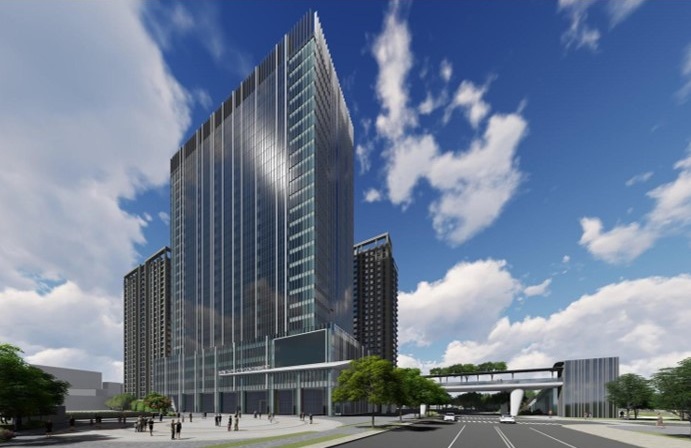
The New Taipei City Government Second Administrative Building received the Excellent Intelligent Green Building DESIGN Award at the 2025 Asia Pacific Intelligent Green Building Awards in recognition of its outstanding integrated energy-saving performance and smart design.
As a flagship example of sustainable infrastructure in New Taipei City, the Danjiang Bridge is the world’s largest single-tower asymmetric cable-stayed bridge. Guided by the core principles of green transportation and ecological conservation, and designed with a target service life of 120 years, the bridge embodies a long-term, sustainability-oriented approach to infrastructure development. Its planning integrates electric bus systems and bicycle lanes, while innovative construction techniques are adopted to enhance structural durability and reduce carbon emissions associated with future maintenance. At the same time, consideration is given to the surrounding ecological environment, reflecting an integrated governance approach that aligns transportation infrastructure with environmental sustainability.
The New Taipei City Hall Annex is designed to serve as a smart, low-carbon public facility, incorporating intelligent green building design and digital management systems, as well as establishing a smart management center to enhance administrative efficiency and the quality of public services while reducing energy consumption. The building is not only a key milestone in New Taipei City’s transition toward net zero, but also a central hub for advancing technology-driven governance and digital transformation, underscoring the upgrade of the city’s governance model.
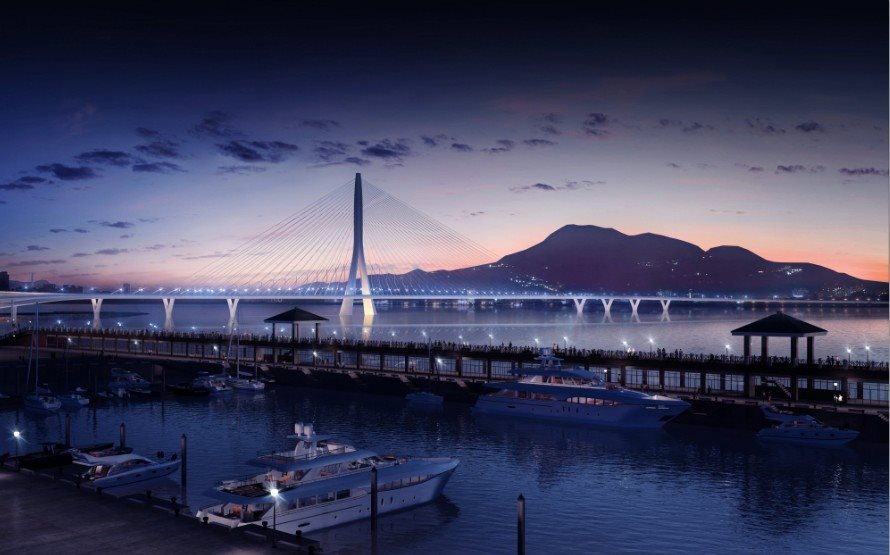
The Danjiang Bridge is scheduled to open later this year, positioning itself as a new international landmark.
By transforming festivals into venues for communicating public policy and citizen participation, New Taipei City continues to explore people-centered approaches to advancing sustainable development, enabling sustainability principles to move beyond policy documents and into everyday urban life, and fostering momentum for sustainability co-created by all citizens. Looking ahead, New Taipei City will further strengthen the integration of culture, technology, and sustainable governance, steadily progressing toward its vision of a livable, resilient, and smart city. Through concrete actions, the city will respond to the shared challenges facing urban centers worldwide and work hand in hand with international city partners to advance sustainable development at the local level.
 Visitor:425